
Choosing the right bra cup is one of the most important decisions in lingerie manufacturing. The cup affects the shape, coverage, support, comfort, and overall appearance of the finished garment. Whether you manufacture everyday bras, padded bras, sports bras, bralettes, or seamless lingerie, the right bra cup can make a significant difference to product quality.
For lingerie brands, garment manufacturers, wholesalers, and private-label businesses, selecting the right bra cup shape and material is essential for developing products that meet customer expectations while maintaining consistent production quality.
At Shri Maha Dev Enterprises, we understand the importance of selecting suitable bra cup solutions for different lingerie designs. This guide explains common bra cup shapes, materials, thickness options, applications, and important factors to consider before placing a bulk order.
What Is a Bra Cup?
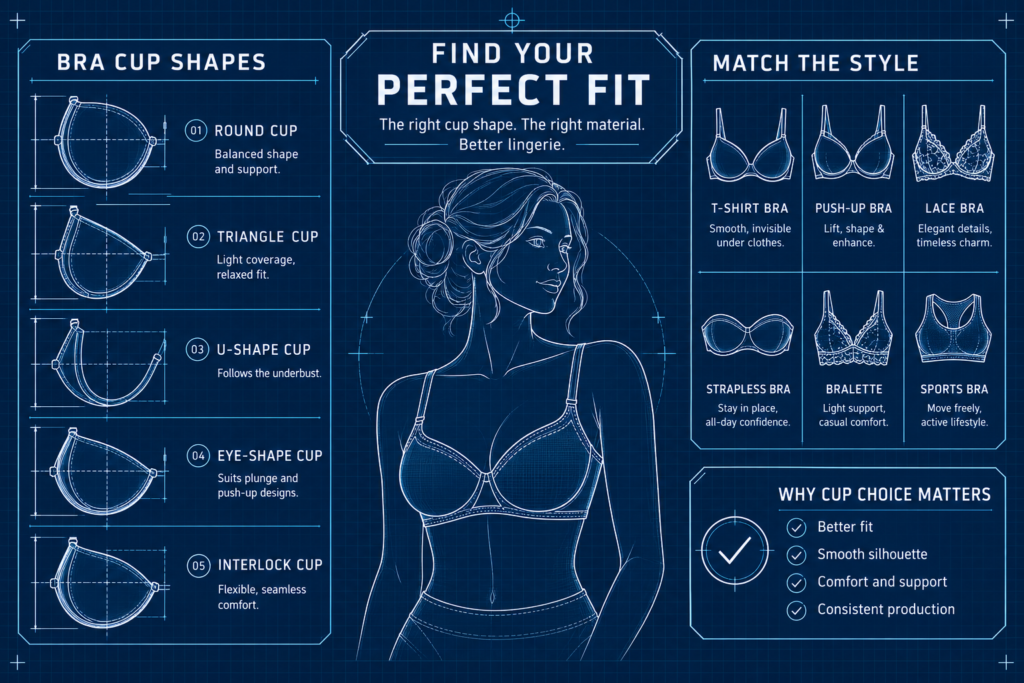
A bra cup is the shaped component of a bra that helps define the bust silhouette and provides coverage. Depending on its design and material, a bra cup may also contribute to support, shaping, modesty, and the smooth appearance of a garment.
Bra cups are used in a wide variety of products, including:
- Everyday bras
- Padded and moulded bras
- T-shirt bras
- Push-up bras
- Sports bras
- Bralettes and crop tops
- Swimwear and other fitted garments
The best bra cup depends on the garment design, desired coverage, outer fabric, intended support level, and target customer.
Different Types of Bra Cup Shapes
Understanding bra cup shapes helps manufacturers choose components that work well with their patterns and finished garments.
1. Round Bra Cup
Round bra cups are designed to create a balanced, rounded silhouette. They are a versatile option for many padded bras and everyday lingerie products.
Key features:
- Rounded appearance
- Versatile design applications
- Suitable for many padded bra styles
- Can be used in different material and thickness combinations
Best applications: Everyday bras, moulded bras, selected T-shirt bras, and other styles requiring a rounded silhouette.
2. Triangle Bra Cup
Triangle bra cups feature a triangular profile and are commonly associated with lightweight, minimal-coverage lingerie designs.
Key features:
- Modern, minimalist appearance
- Suitable for lightweight designs
- Works well with many bralette styles
- Can complement wire-free constructions
Best applications: Bralettes, fashion lingerie, lightweight bras, and selected swimwear designs.
3. U-Shape Bra Cup
U-shape bra cups are designed with a curved lower profile that can follow the underbust area in suitable garment constructions.
Key features:
- Curved lower profile
- Useful for structured lingerie designs
- Can be incorporated into selected underwired or semi-structured bras
Best applications: Structured bras and designs requiring a specific lower-cup profile.
The final fit depends on the cup dimensions, underwire shape where applicable, and the garment pattern.
4. Eye-Shape Bra Cup
Eye-shape bra cups feature an elongated profile that may be suitable for selected plunge and push-up constructions.
Key features:
- Elongated cup profile
- Suitable for selected low-neckline designs
- Can be incorporated into shaping-focused lingerie
Best applications: Plunge bras, selected push-up bras, and fashion lingerie requiring a particular neckline or shaping effect.
5. Left-Right Bra Cups
Left-right bra cups are designed as separate mirrored components for the left and right sides of a garment.
Key features:
- Side-specific construction
- Useful for designs requiring different left and right cup orientations
- Can help maintain the intended shape of an anatomically designed garment
Best applications: Selected moulded bras, contour lingerie, and designs with specific left-right shaping requirements.
Manufacturers should confirm the orientation, sizing, and compatibility of both cups with the approved pattern before production.
6. Interlock Bra Cups
Interlock bra cups use a knit-based construction that can provide flexibility and a softer feel, depending on the material specification.
Key features:
- Flexible construction
- Suitable for selected wire-free designs
- Can work well in lightweight garments
- May provide less defined shaping than some moulded foam cups
Best applications: Soft bras, selected seamless styles, bralettes, and flexible activewear designs.
Bra Cup Materials: Which One Should You Choose?
The material of a bra cup affects its feel, flexibility, shape retention, appearance, and performance in the finished garment.
Foam Bra Cups
Foam bra cups are widely used in padded and moulded lingerie. Depending on the foam density and construction, they can provide a defined shape and a smooth appearance.
They may be suitable for everyday bras, padded bras, and selected T-shirt bra designs.
Laminated Bra Cups
Laminated bra cups combine a base material with one or more bonded layers. The construction can help achieve a smoother surface and improve compatibility with selected outer fabrics.
Before bulk production, check the bonding quality, surface finish, flexibility, and performance after washing.
Interlock Knit Bra Cups
Interlock knit cups are suitable for designs where flexibility and a soft feel are priorities. Their performance depends on the knit structure, stretch recovery, and the way they are integrated into the garment.
They can be considered for selected bralettes, wire-free bras, and activewear products.
Polyester Bra Cups
Polyester-based bra cups can offer a range of firmness, flexibility, and shape characteristics depending on the construction.
They may be suitable for selected everyday lingerie and activewear applications. Confirm the actual material composition and test performance against the requirements of the finished garment.
How Bra Cup Thickness Affects the Finished Product
Bra cup thickness influences padding, projection, flexibility, bulk, and the appearance of the outer garment.
Thin Bra Cups
Thin cups are useful for designs that prioritise light padding and reduced bulk. They may suit lightweight bras, selected seamless garments, and natural-looking silhouettes.
Medium-Thickness Bra Cups
Medium-thickness cups can provide a balance between padding and a defined shape. They are commonly considered for everyday padded bras and selected moulded designs.
Thick and Push-Up Bra Cups
Thicker cups can add volume and projection in designs that require a more enhanced silhouette. Their weight, shape, and edge profile should be checked against the garment pattern.
Important: There is no single thickness suitable for every bra. Final specifications should be based on the approved design, material, size range, and fit-testing results.
Choosing the Right Bra Cup for Different Lingerie Styles
Everyday Bras
For everyday bras, prioritise comfort, a suitable shape, consistent sizing, and reliable performance after washing. Round or other appropriately shaped foam cups may be suitable depending on the design.
T-Shirt Bras
T-shirt bras generally require a smooth appearance under clothing. Moulded or laminated cups can be considered where the garment needs a clean surface and minimal visible cup lines.
Push-Up Bras
Push-up bras require carefully selected cup geometry and padding placement. Check the desired projection, neckline, centre-front construction, and fit across the intended size range.
Sports Bras
Sports bras require a design that manages movement and provides an appropriate level of support. Cup selection must work together with the garment’s compression, straps, band, seams, and overall construction.
Do not assume that the cup alone determines support. Test the complete garment during movement and under the intended conditions of use.
Bralettes
Bralettes often prioritise softness, flexibility, and lightweight construction. Triangle cups, flexible knit cups, and other suitable cup styles can be considered according to the design.
Seamless Bras
Seamless bras require close attention to cup edges, surface finish, thickness, and consistency. The selected cup must integrate smoothly with the outer fabric without unwanted lines or visible differences in shape.
What to Check Before Ordering Bra Cups in Bulk
Selecting a bra cup is not only a design decision. It is also a sourcing and quality-control decision.
1. Verify Dimensions and Size Grading
Request a specification sheet that records the relevant dimensions, cup shape, thickness, and size information.
Check samples against your approved pattern and grading rules. Do not rely on a general size description alone.
2. Inspect Material Quality
Confirm the material composition and check for visible defects, uneven surfaces, inconsistent density, and damaged edges.
3. Test Shape Retention
Compress and release sample cups according to a consistent test procedure. Observe whether the cups recover their intended shape.
Where washing is relevant, test samples using the intended care conditions.
4. Check Lamination and Edge Finishing
For laminated cups, inspect the bonded layers and look for separation, bubbling, or uneven adhesion. Check whether the edges integrate properly with the garment construction.
5. Confirm MOQ and Lead Time
Minimum order quantities (MOQ) and lead times vary by supplier, material, design, and order volume. Request written confirmation before finalising your production schedule.
6. Request Samples Before Bulk Production
Sample approval helps identify problems before they affect an entire production run. Test the selected cups inside the actual garment rather than evaluating them in isolation.
Custom Bra Cups for Lingerie Manufacturers
Custom bra cups can help brands develop products around their own patterns, size ranges, material preferences, and design requirements.
Depending on the supplier’s capabilities, custom development may involve adjustments to cup shape, thickness, material, surface finish, or size grading.
Before placing an order, clarify:
- Available standard and custom shapes
- Supported materials and thicknesses
- Sample development process
- Minimum order quantities
- Production lead times
- Quality-control procedures
- Packaging and delivery requirements
These details help manufacturers assess whether a supplier can support both product development and repeat production.
Why Choose the Right Bra Cup Supplier?
A suitable bra cup supplier should provide clear product specifications, consistent samples, reliable communication, and transparent production terms.
For lingerie manufacturers and wholesale buyers, these factors can help reduce sampling problems, improve production planning, and maintain consistency between approved samples and bulk orders.
Shri Maha Dev Enterprises provides a starting point for businesses looking to explore bra cup products. Buyers should confirm current product availability, material options, customisation capabilities, MOQ, and lead times directly with the company.
Explore the products: https://shrimahadeventerprises.com/products/
For enquiries and quotations: https://shrimahadeventerprises.com/contact/
Conclusion
Choosing the right bra cup begins with understanding the garment’s intended shape, coverage, comfort, and performance requirements. Round, triangle, U-shape, eye-shape, left-right, and interlock cups can serve different design purposes, while foam, laminated, knit, and polyester constructions offer different material characteristics.
For the best results, finalise the cup shape first, select the appropriate material and thickness, and then verify the specifications through physical samples and garment testing.
If you are developing a new lingerie collection or expanding an existing product range, request samples and technical specifications before committing to bulk production. Careful cup selection at the development stage can help protect your product quality, production efficiency, and brand reputation.
Contact Shri Maha Dev Enterprises to discuss your bra cup requirements and request a quotation for your next lingerie project.
Website: https://shrimahadeventerprises.com/
Contact page: https://shrimahadeventerprises.com/contact/